
Solarpunk NOWpresents Regeneration Hubs
ENDE
Start · PLAYtoGROW

Make your ownInfinity Wax

Here we make Beenius: the wax that joins, the sticks that get joined, and your own version of the recipe.

Four ingredients, a pot of water and an hour, and you hold a connector that never dries out and is never used up.

Our blend comes from what Berlin sells, so treat it as a starting point: work out the one that fits where you live, then tell us what you found.

What is Beenius?

A connector made of beeswax. Press in a stick, press in a second, and the joint holds in about two seconds. It never dries out and it is never spent: pull the model apart and the same wax builds the next one. That is the infinity in Beenius Infinity Wax.

The sticks are the other half. Four lengths and a lump of wax, and minutes later a structure stands that holds its own weight, without glue, drying time or anything thrown away. Wax and sticks in one box is the Beenius set, and both halves can be made by you, which is what this Journey is for.

Living with the wax

It is skin friendly, antibacterial, water resistant, and it holds its shape when things get damp. Some things to know before it surprises you:

  • It melts in the sun. Keep it somewhere cool and out of direct light.
  • It stains. Be careful on delicate surfaces and fabrics.
  • It sticks to almost everything, dirt included. Outdoors that is either the problem or the plan.
  • It is made of beeswax and it is not food.
Where the beeswax comes from

The simplest way is a beekeeper near you who works in a way that protects the bees. Ask around, there are more of them than you think.

Otherwise: online sellers carry beeswax in many forms, avoid the pellets, they do not work for this. Organic shops and craft shops usually have it. And most supermarkets sell candles made of pure beeswax, which turn into Beenius Infinity Wax exactly like any other block.

If you would rather not make the wax yourself, or want the reference in your hands before you do, the set is on solarpunknow.world.

Get the  Beenius  set

What you need

For the wax

  • Beeswax, pure, 100 g
  • Lanolin, 6 g
  • Tree resin, colophony, 4 g
  • Kaolin, 12 g
  • A heat resistant glass, an empty jam jar does the job
  • A pot with water, for the water bath
  • Baking paper
  • Kitchen scales
  • Something to protect your hands, the glass gets hot

For the sticks

  • Bamboo skewers, the kind sold for grilling, or another stick from the list further down
  • Parcel tape
  • A mitre box and a saw, a Japanese Dozuki cuts most precisely
  • Or a strong pair of scissors, or garden shears

Work it out where you are

Where you are, one of the four ingredients may be expensive, hard to get, or wrong for the climate. Copy a prompt, paste it into the AI assistant you use, and write underneath which region you are in: the prompt carries the recipe and the job every part has to do, so what comes back is a local material, not a guess.

Prompt · the wax

What each of the four ingredients has to do, so your AI assistant can find local materials that do the same job.

Read the prompt
You and I are working this out together. Before you start: tell me
plainly when you do not know something, disagree with me out loud
when you think I am wrong, and leave every decision with me. I am
not looking to be served, I am looking to think alongside someone.

I want to make a modelling wax for a construction kit from materials
I can get where I live.

The reference recipe, developed in Berlin: 100 g pure beeswax,
6 g lanolin, 4 g tree resin (colophony), 12 g kaolin clay. That
batch is enough for a small group of about four people building
together; scale every part by the same factor for more. The
lanolin and resin are melted together in a water bath, the beeswax
goes in after them, then the glass comes off the heat and the kaolin
is worked in slowly. Poured onto baking paper and left to cool.

One rule holds over every substitution: keep it natural. Everything
that goes in should be something I could get again next year from
the place I am standing in.

Each ingredient does a job, and a local substitute has to do the
same job:
The beeswax is the body. Soft enough to knead with hand warmth,
firm enough to hold a shape at room temperature.
The lanolin is the softener. It keeps the block pliable and stops
it cracking or going brittle over time.
The tree resin is the tack. It makes the wax grip a stick rather
than merely touch it.
The kaolin is the filler. It gives the block body, takes excess
stickiness off the fingers, and gives a matte surface.

The finished wax has to: knead soft in the warmth of a hand, join
two sticks in about two seconds and hold them, never harden or dry
out, come off fingers and sticks without residue, be safe for
children to handle for hours, and be re-warmed and reused
indefinitely.

Tell me, for my region:
1. Which locally available materials could fill each of the four
   jobs, and what starting ratios you would try.
2. Whether there is a different route to the same result entirely,
   built from materials that are common here, rather than a
   substitution inside this recipe.
3. What to avoid, and why.
4. How I test a batch to know whether it works.

Two of the four ingredients come from animals, so also propose a
fully plant-based version I could try. Plant waxes tend to be harder
and to melt hotter than beeswax, so the balance will not be a
straight swap. I would rather know where a plant-based version
performs worse than be told it is equivalent.

The only thing you ask me for is where I am, and only if I have not
said it. Everything else follows from that: the climate, the seasons
and what is sold or grows nearby. Do not ask me about my hands, my
tools or my experience. If something is unlikely to be available
where I am, say so in the answer itself and give me the local
alternatives you would try instead.

Prompt · the sticks

What a stick has to do, so your AI assistant can name what grows or gets thrown away near you.

Read the prompt
You and I are working this out together. Before you start: tell me
plainly when you do not know something, disagree with me out loud
when you think I am wrong, and leave every decision with me. I am
not looking to be served, I am looking to think alongside someone.

I need sticks for a construction kit. They get joined with a soft
modelling wax: you roll a small ball of wax and press the ends of
two sticks into it.

The reference is bamboo skewers, the kind sold for grilling, cut to
5, 8, 13 and 21 centimeters, the Fibonacci numbers, so that a short
stick and a middle one reach as far as the next size up.

One rule holds over every substitution: keep it natural. Everything
I use should be something I could get again next year from the place
I am standing in.

What a stick has to do: stay straight, be thin enough to push into
a ball of wax without splitting the ball, be stiff enough not to sag
when it carries part of a structure, pull back out cleanly, and be
safe in the hands of children for hours.

Tell me, for my region:
1. Which plants or materials near me could give good sticks, wild
   or cultivated or bought, including things normally treated as
   waste.
2. If I cut them fresh, how to dry and store them so they stay
   straight and do not split or mould.
3. How to cut many to identical lengths with ordinary tools, and
   what makes the cuts go wrong.
4. What to avoid: species that splinter, anything treated, painted
   or toxic to handle.
5. Whether the Fibonacci lengths make sense with what grows here,
   or whether a different set of lengths suits the material better.
6. How to colour them safely if I want to, using what is around.

The only thing you ask me for is where I am, and only if I have not
said it. Everything else follows from that: the climate, the seasons
and what is sold or grows nearby. Do not ask me about my hands, my
tools or my experience. If something is unlikely to be available
where I am, say so in the answer itself and give me the local
alternatives you would try instead.

The blend

Our current Berlin blend, the most beautiful ratio we have found so far:

100 g   beeswax
  6 g   lanolin
  4 g   tree resin, colophony
 12 g   kaolin

This batch is enough for a small group of about four people building together. For more, scale every part by the same factor.

The recipe is open, and it is meant to be varied where you live.

What each one does

100 g Beeswax is the body. Everything else adjusts it.
4 g Lanolin keeps it soft and pliable. It is what your hands feel.
4 g Colophony makes it grip. Resin is where the hold comes from.
12 g Kaolin gives it substance and the soft matte surface, and takes the greasiness out.

Four ingredients, four jobs. Whatever goes wrong points at one of them.

How we did it
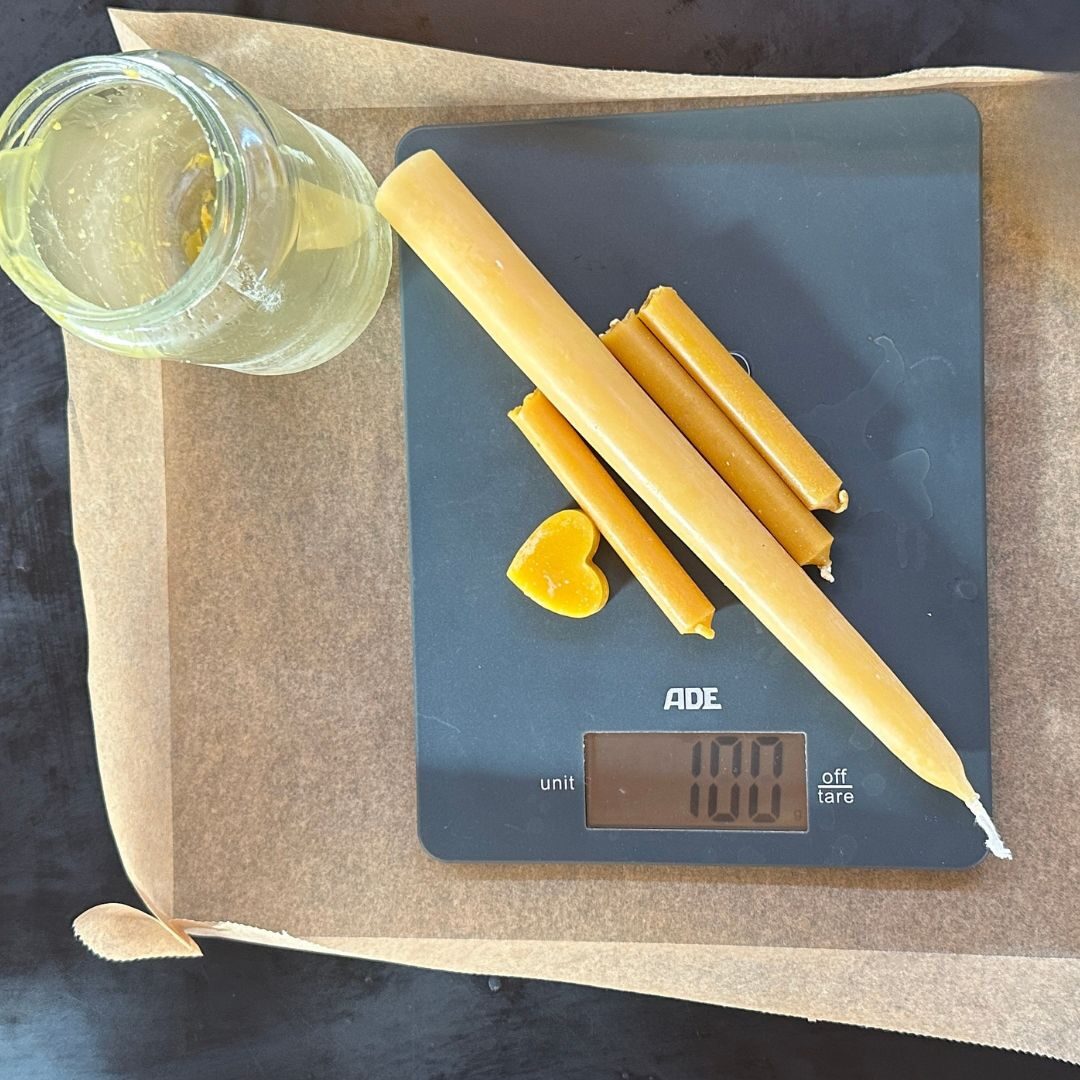
Beeswax on the scales at 100 grams, the components laid out
1

Weigh everything out

Before anything gets warm. Once the wax runs you want your hands free.
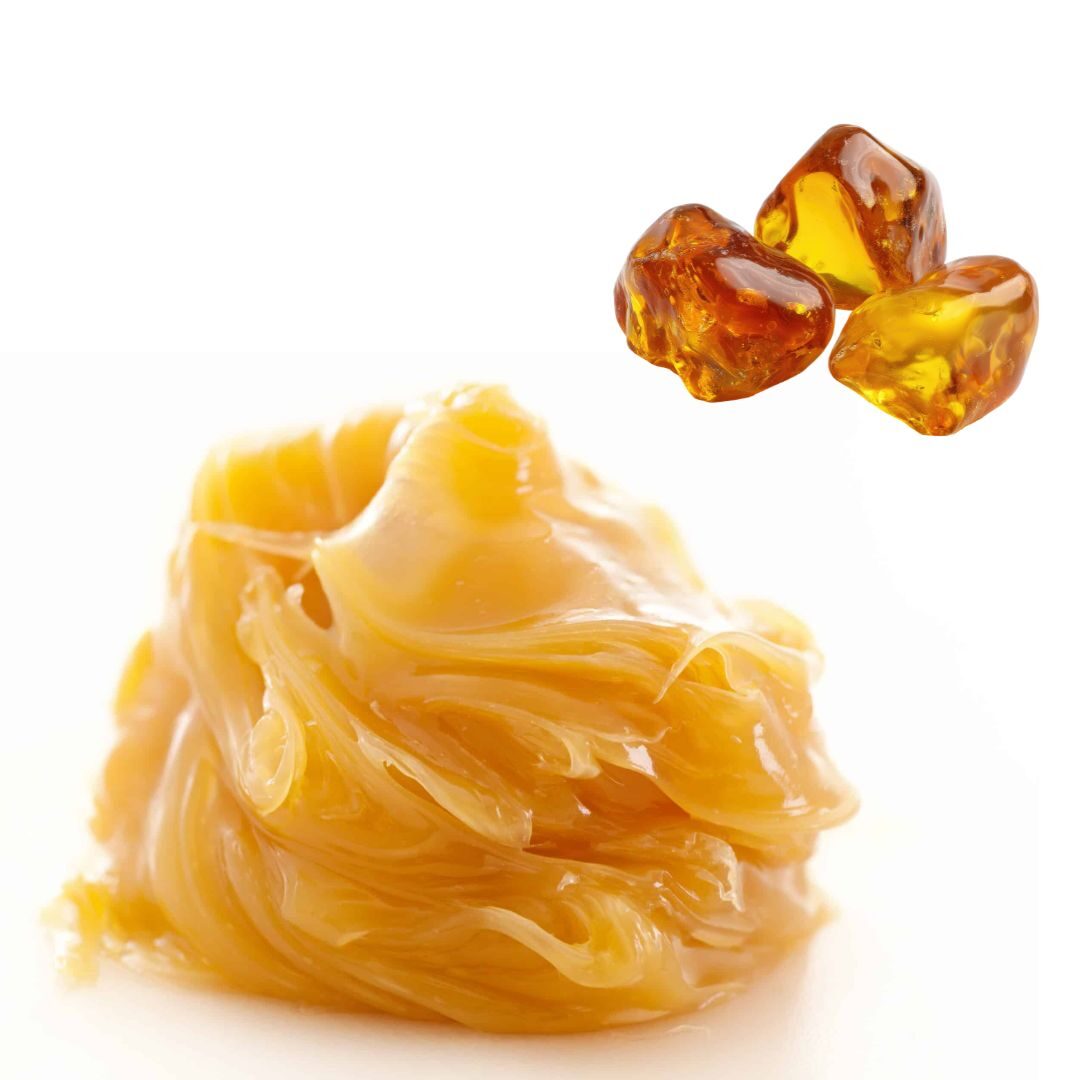
Lanolin and resin melting together in the glass
2

Lanolin and resin first

Both go into the heat resistant glass, the glass goes into a pot of water. Melt them together. They go in before anything else because resin needs more heat than wax does, and the wax never touches the flame, only the water does.
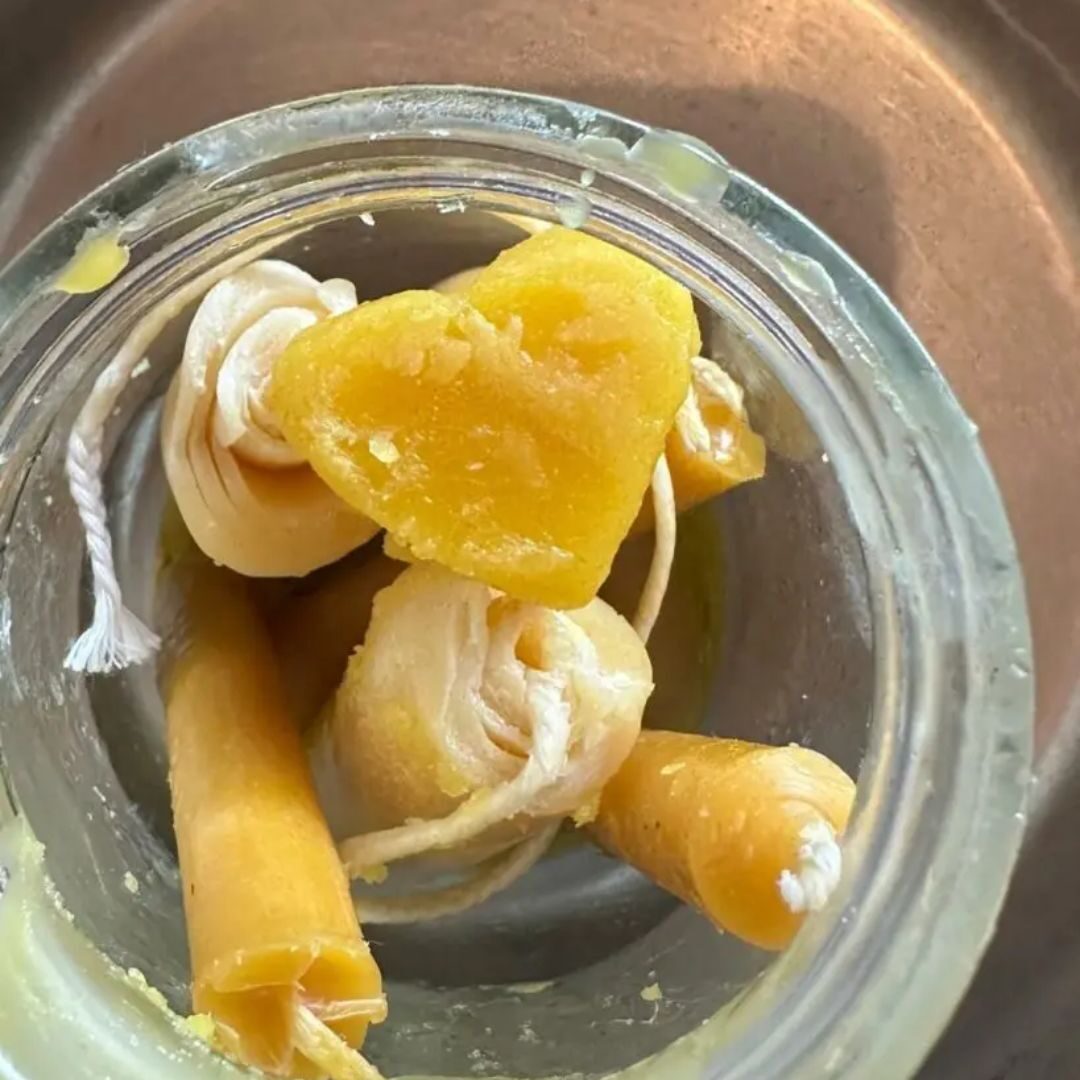
The melt going clear as the beeswax goes in
3

Then the beeswax

Into the melted lanolin and resin. Low heat, and wait until everything has gone liquid and runs clear. Cloudy means something has not gone in yet. Beeswax that boils has been treated badly.
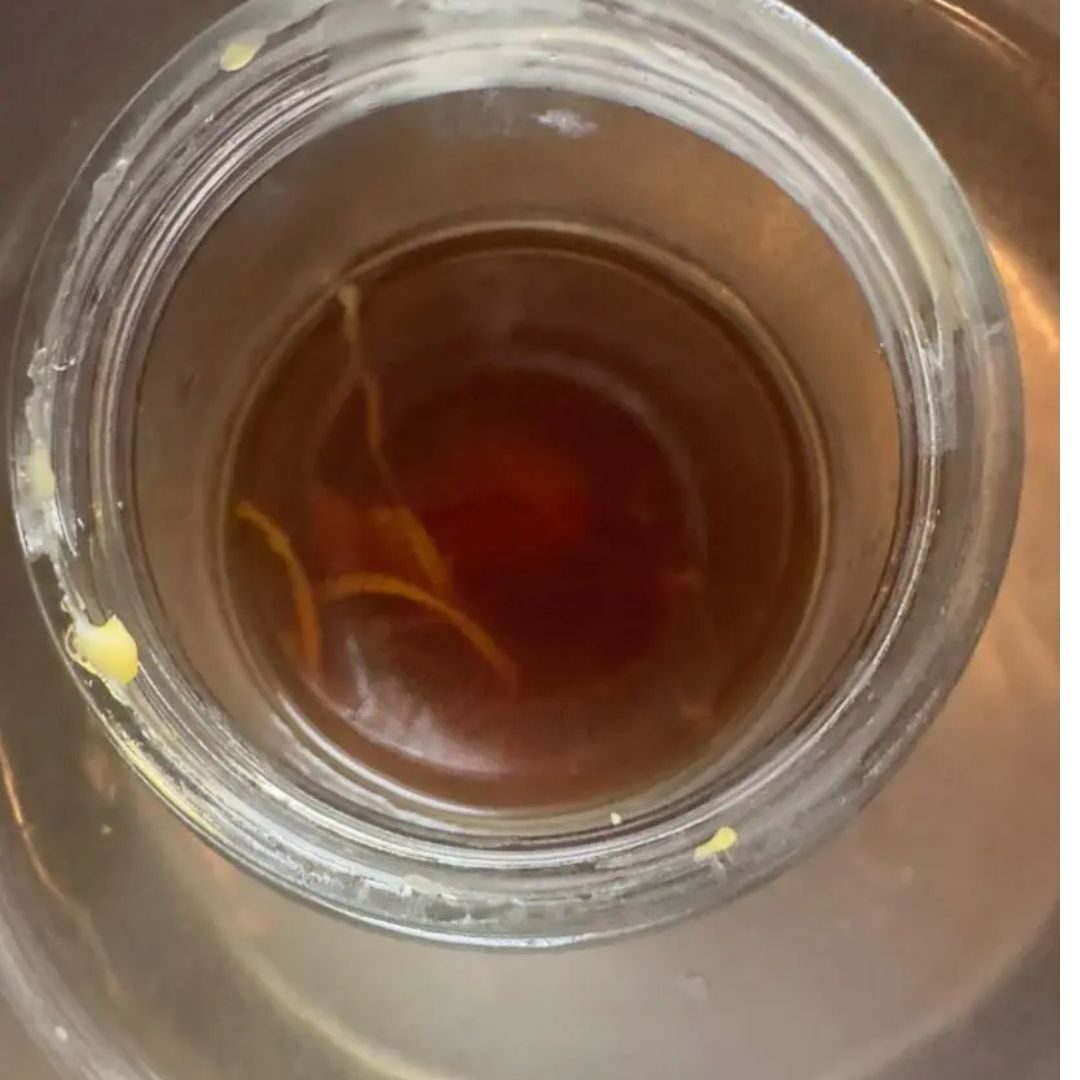
The glass off the heat, kaolin worked in
4

Off the heat, then the kaolin

Take the glass out of the water with your hands protected, it is hot. Work the kaolin in slowly, away from the heat. It is what gives the wax body and its soft matte surface, and it wants patience.
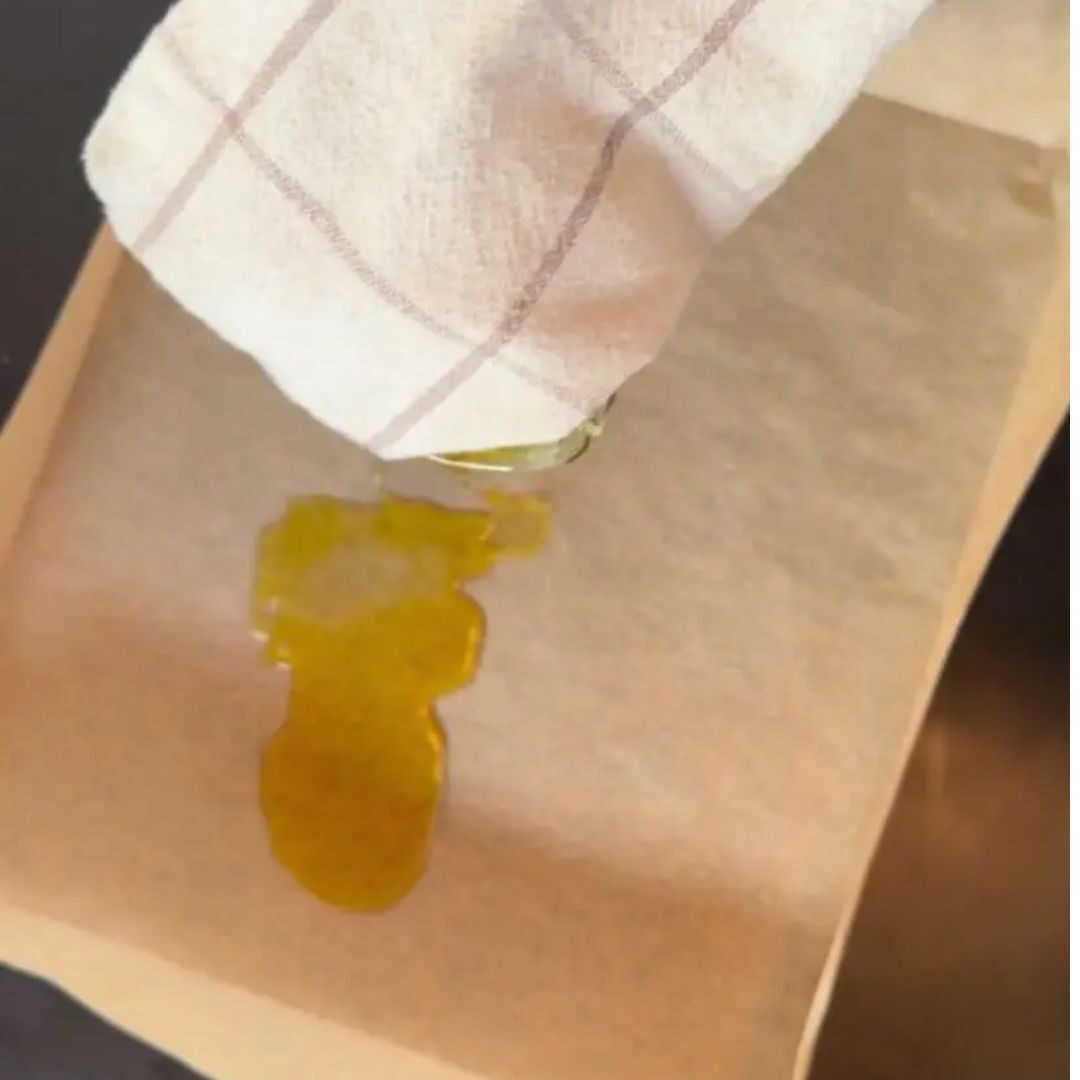
The wax poured onto baking paper
5

Pour onto baking paper

Baking paper is what we use and what we keep coming back to: it costs nothing, it is in most kitchens, and the cooled sheet peels straight off. A silicone mould gives you finished shapes instead of a sheet, and for us it was more washing up for no better wax.
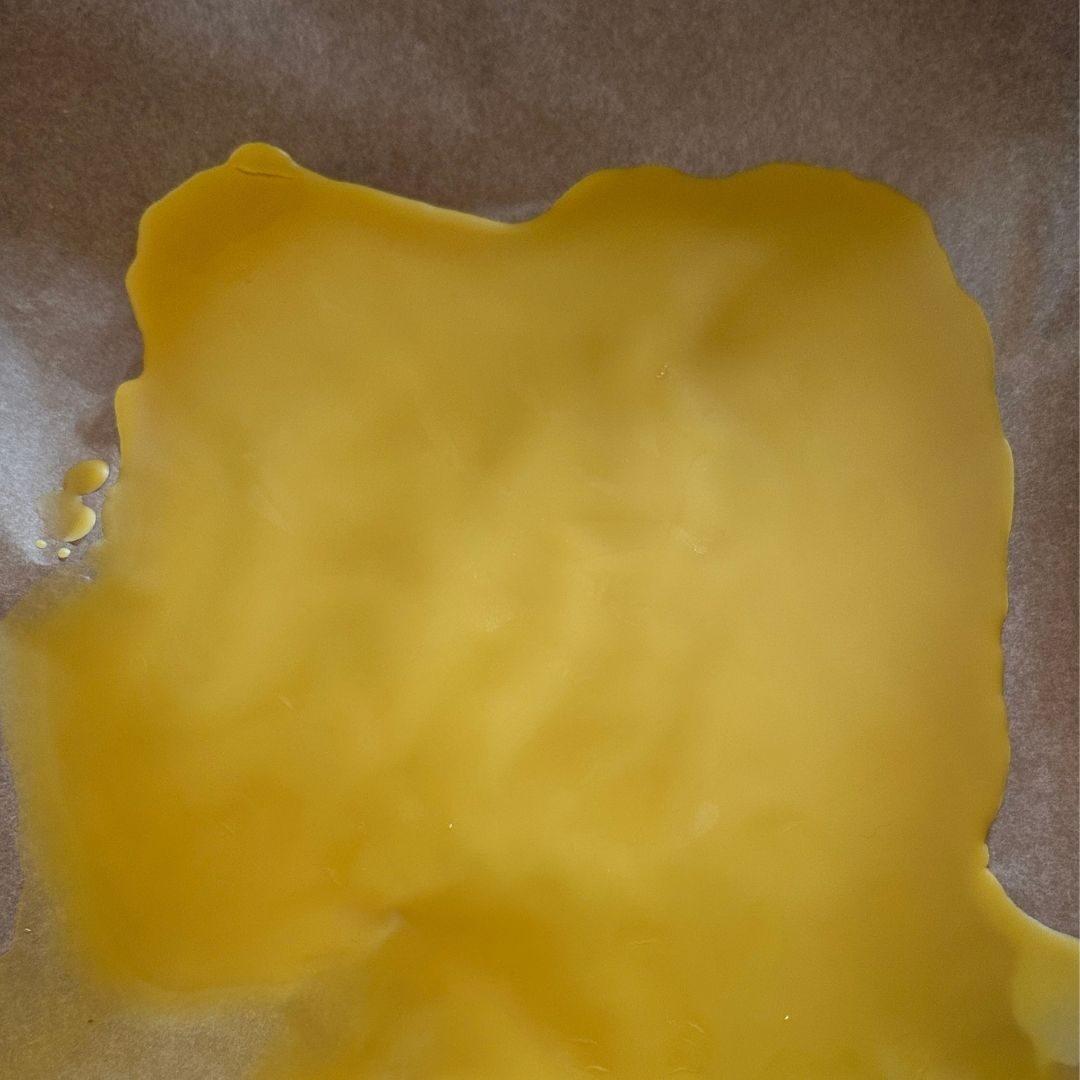
The cooled sheet of wax
6

Let it cool

A few minutes, until the block is firm and cool to the touch. Kneadable, not brittle.

Did it work

Take a piece and find out.

It came out wrong

Melt it again and correct it. Nothing is lost in either direction, which is the whole point of this material.

  • Too soft: more beeswax.
  • Too hard: more lanolin. If it stays hard, take the kaolin down in the next batch, because that is what makes it stiff.
  • No grip: a little more colophony, in small steps. Resin is hard and turns brittle in the cold, so more of it against hardness makes hardness worse.

Directions, not measurements. Move in small steps and write down what you did, otherwise the batch that finally works is the one you cannot repeat.

The sticks

5 · 8 · 13 · 21 cm

5 8 13 21 cm

The Fibonacci numbers. The lengths combine the way the sequence itself unfolds, so a short stick and a middle one reach exactly as far as the next size up. You stop measuring and start building.

We also call them golden sticks, because the same proportion runs through the golden ratio. If you want a different set, pick your longest stick and divide by 1.618 for the next one down, and again from there.
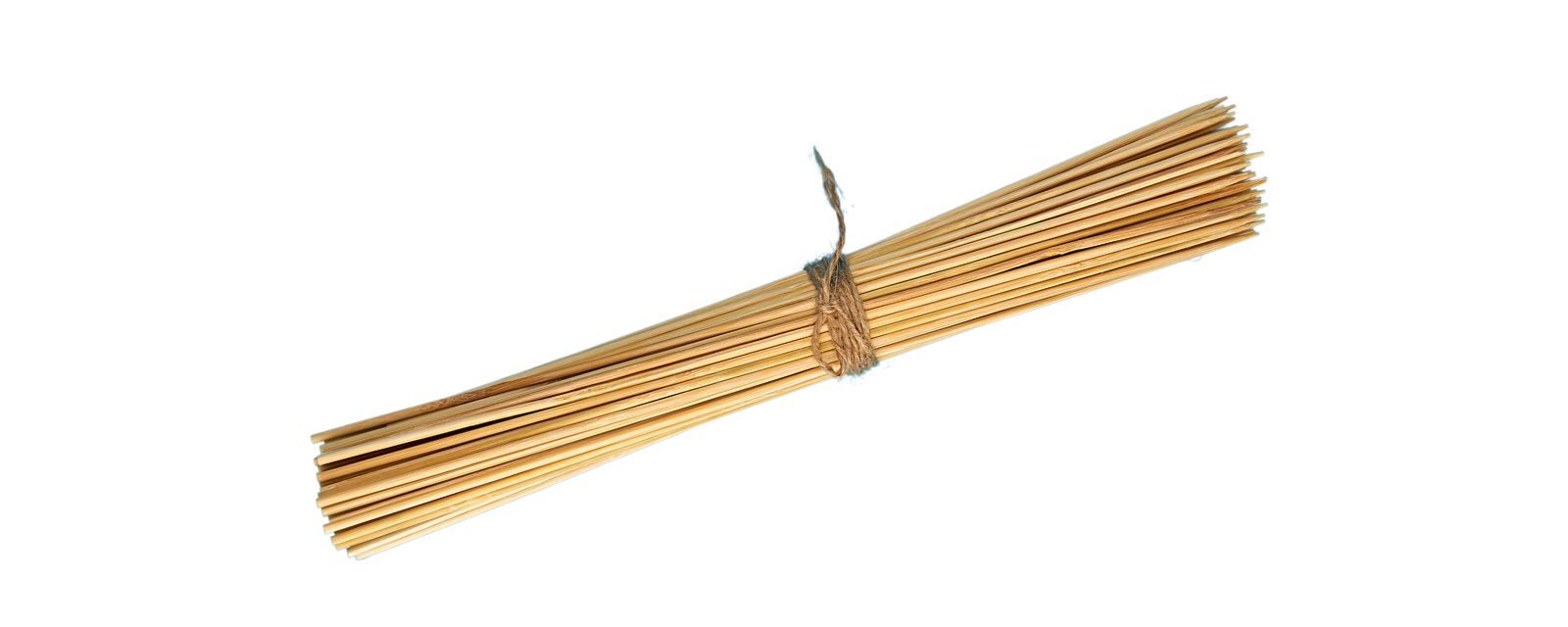
A bundle of bamboo sticks tied with twine

What counts as a stick

Almost anything straight. Bamboo skewers from any shop, toothpicks, twigs and branches straight from outside, dowels, popsicle sticks, thin metal rods for structures that need to take weight, plastic sticks from party shops. Each size opens a different world, and the branches bring in the one designer none of us can outdo.

Colour them if you want to: food colouring, plant colours such as beetroot juice, felt pens, or glow in the dark paint for building at night.

Cutting a lot of them at once
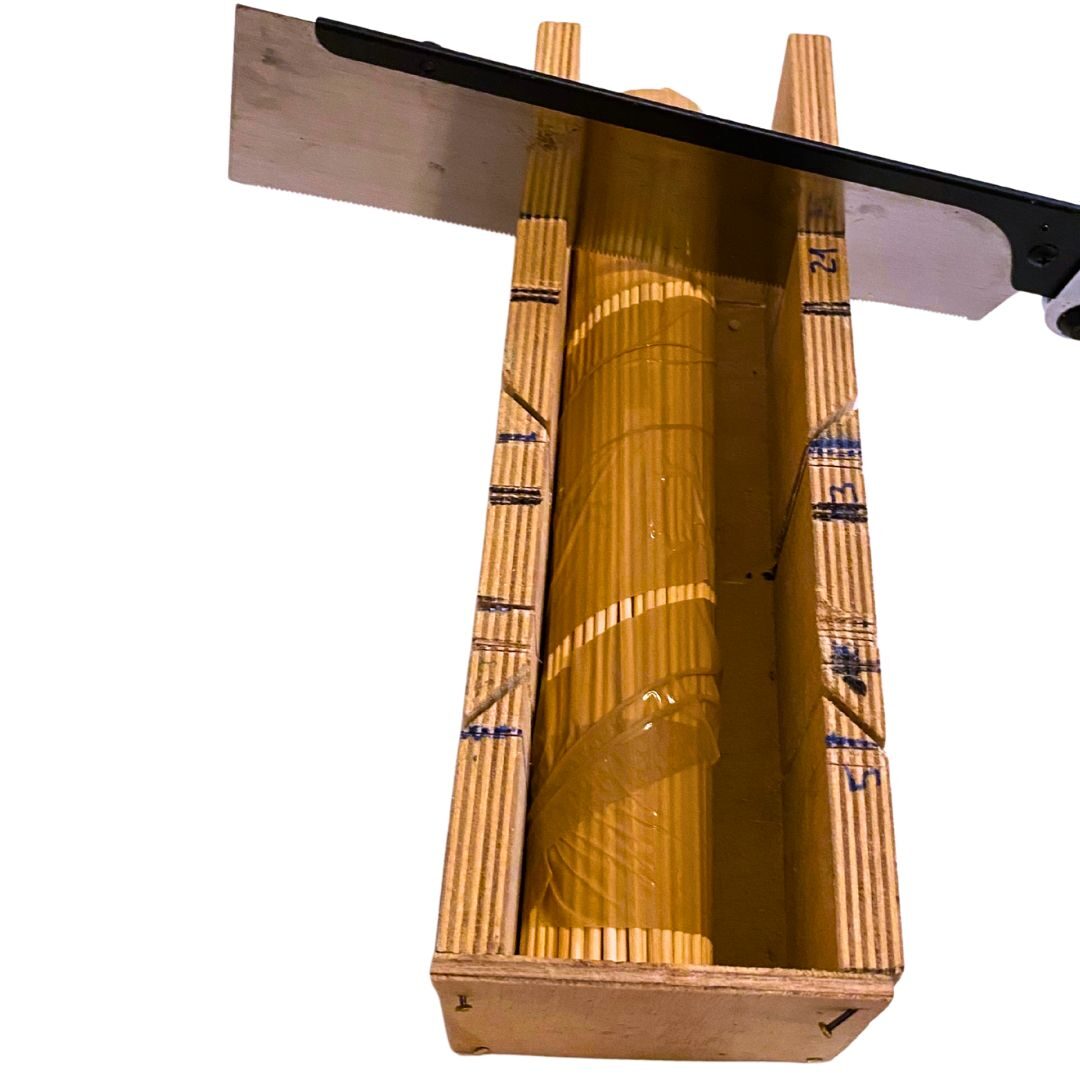
The taped stick bundle in the mitre box, saw in place

Wrap the whole bundle in parcel tape and mark where the cuts go. Saw the lengths into a mitre box, lay the taped bundle in, cover the top and saw through. A Dozuki saw is the most precise, most other saws manage.
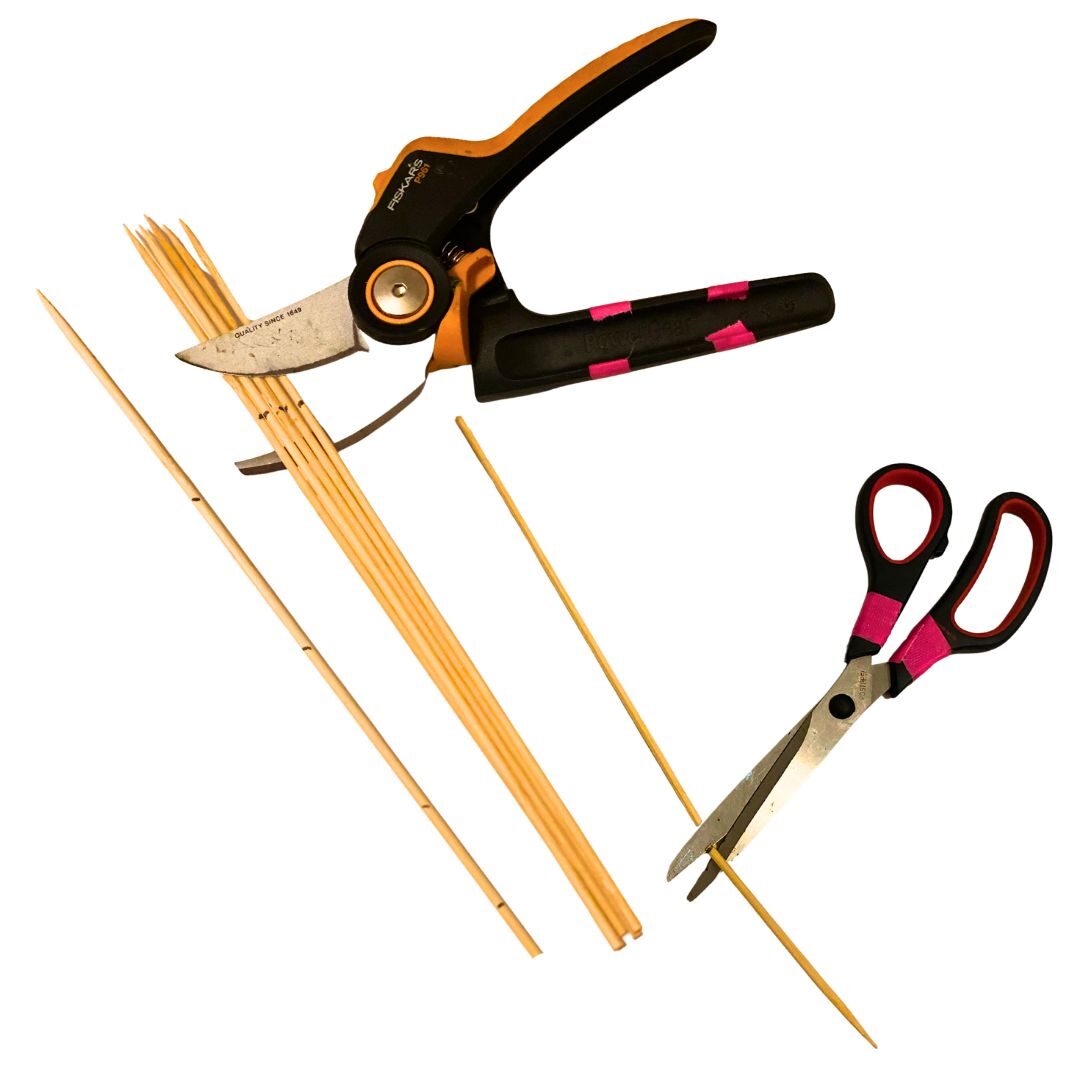
Cutting the sticks with shears and scissors

Without a saw: score the sticks with strong scissors and break them carefully, or cut them with garden shears while somebody holds the bundle so the pieces do not fly. Less precise, entirely good enough, and everybody has one of the two at home.

The permaculture in this

A tool you made yourself changes what you are allowed to try. Wax and sticks come apart again, so nothing you build with them is final: a shape from yesterday is material again today. The material keeps coming back, the knowledge keeps moving. You made it: You weighed, warmed, poured, waited and tested until a handful of raw things turned into something that works, and that is the skill worth keeping: knowing where a material comes from, knowing what to change when a batch comes out wrong, and trusting your own hands with the answers.

Next

Start Get to Know Infinity Wax Your first build, and the moment you feel why it connects so fast. Start Collect Infinity Stonepaper Get the material, in Europe or by starting distribution where you live. Start Get to Know Infinity Stonepaper What changes in a room when nothing anybody writes is final.
See all Journeys

Log

August 2026 Published.